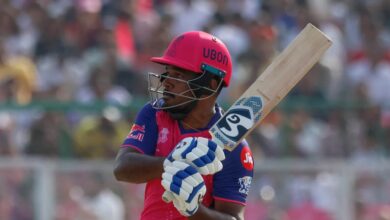
The 2026 Indian Premier League (IPL) match between Kolkata Knight Riders (KKR) and Lucknow Super Giants (LSG) saw a major controversy in the 20th over as Kartik Tyagi was allowed to bowl the 20th over despite delivering two beamers. Even KKR was ready to take the pacer out of the attack, but the umpires claimed that Tyagi could continue bowling.
The reason behind the decision was described by Harsha Bhogle on-air: the second no-ball was not deemed to be dangerous by the umpires.
As per the laws of the game (41.7), a player is asked to be taken away from the bowling attack only if he bowls two dangerous deliveries. A warning is given after the first such instance. This does not mean that any waist-high no-ball is regarded as dangerous. In Tyagi’s case, the first no-ball was considered dangerous but not the second.
IPL Playing Conditions – What The Law Says – Full Text
41.7 Bowling of dangerous and unfair non-pitching deliveries
41.7.1 Any delivery, which passes or would have passed, without pitching, above waist height of the striker standing upright at the popping crease, is to be deemed to be unfair, whether or not it is likely to inflict physical injury on the striker. If the bowler bowls such a delivery the umpire shall immediately call and signal No ball.
41.7.2 The bowling of a delivery as defined in 41.7.1 is also dangerous if the bowler’s end umpire considers that there is a risk of injury to the striker. In making that judgment the umpire shall:
disregard any protective equipment worn by the striker
be mindful of:
the speed, height and direction of the delivery
the skill of the striker
the repeated nature of such deliveries
41.7.3 If the umpire considers a non-pitching delivery, or a series of non-pitching deliveries, to be dangerous under 41.7.2 when the ball is dead, the umpire shall repeat the No ball signal to the scorers and then caution the bowler, indicating that this is a first and final warning. The umpire shall also inform the other umpire, the captain of the fielding side and the batter of what has occurred. This caution shall apply to that bowler throughout the innings.
41.7.4 Should there be any further dangerous such delivery by the same bowler in that innings, the umpire shall:
call and signal no ball
when the ball is dead, direct the captain of the fielding side to suspend the bowler immediately from bowling
inform the other umpire for the reason for this action
The bowler thus suspended shall not be allowed to bowl again in that innings.
If applicable, the over shall be completed by another bowler, who shall neither have bowled any part of the previous over, nor be allowed to bowl to bowl any part of the next over.
More to follow…