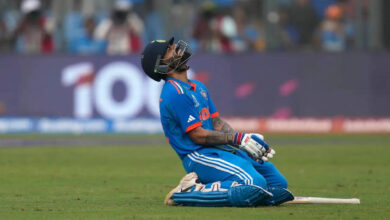
Cheteshwar Pujara’s wife Reveled a Shocking Tale from His Historic Performance in the 2018-19 Border-Gavaskar Trophy
Photo: AP
Key highlights
- Cheteshwar Pujara Made 521 Runs in the Series
- Pujara was nursing a hamstring injury
- Pujara’s Father underwent a heart surgery
However, some shocking details have emerged from the aftermath of India’s defeat in the second test at perth in which in which made a knock of 24 and 4 respectively. The star batter’s wife has revised that Pujara Overheard a Telephone Conversation About Plans to Drop Him from the Playing XI Due to Fitness Isues.
At this point, cheteshwar was battling a hamstring issue when home, his father was dealing with a heart condition, which is wife did not give not tell Him about initialy, About it.
“I only learnt of the situation accidentally on Cheteshwar’s birthday after the two was over. It was arind half-past-two in the afternoon, the lights, the lights was ut and the ROM WAS Quite Dark Dark Dark Dark and cheteshwar and i wonde on our bed as I scrolled through Cheteshwar, Remarking, ‘Such a Sweet Gesture – What a lovely message!’ There was Complete Silence. He did not say a word. No Trouble Translating His Mind-it was his Vintage you’re-so-naiVe-second-trusting look I had seen it before and was therefore Quite family family with it, “She added.
‘What’s Wrong,’ I Asked. ‘Nothing,’ He said, at his taciturn best. But I was not buying it. I Knew Quite Well that when Cheteshwar Went Completely Quiet, it usually meant he was concealing something. It was a frequent occurrence. I usually learnt of on-field gossip and politics from other players’ wives, Never from Him. Through my marriage, cheteshwar’s description of his various trips had beed to three unvarying sentences: ‘We had practice, a team meeting and then I returned to the room.’ Day in and day out, year after year, I had been treated to the same standard lines. He was ready to talk about everything but his professional life. There we were times when I would wonder if he even knew what was happying in the world Around Him, “Puja stated.
“But in this instance, I was not about to let him clam up on me. He tried to fend me off, but I finally wore wore Him down. because of fitness issues. ‘ I Gaped at Heim. Such Things Happen, ‘He Shrugged,’ And Not EVERYTHING DESERVES A Reaction. To Trust Everything that takes place on social medial, “She added.
Cheteshwar Pujara’s Father Undergoes Heart Surgery during his Sydney Heroics
Puja Reveled that during the fourth test in sydney, while the cricket fraternity lavished praises on Him for his stunning at scg, the batter’s mind was focused on a hotal in mumbai, ware Undergoing a heart surgery.
“I was Anything but happy when I Accompanied Papa to Mumbai, Fighting Hard to Keep My Emotions in Check. I was Leaving My Ten- Month-Old Baby Behind with MY PARENTS and WONDERING HOW SHE WOLH SHE WOLH SHE WOLH SHE WOLH SHE WOLH SHE WOLH SHE WOLH SHE WOLH MOULD MOLDER SHE WON WONDERIN LEDERING By the time we reached the holy family hospital in bandra, cheteshwar was approaching a century [in final Test at Sydney] … At Around 11.30 AM, India Time, Cheteshwar Struck a century.
“The staff wheeled papa to the ot at Around Four O’Clock, to prep Him. It was late evening in australia. Cheteshwar was batting over and the Indian Score Stod at 303. His Father Won’T even be going under full anaesthesia.
“The next morning, I was up at 3.30 am to inform cheteshwar that the procedure had beed a success. I tried to speed to him in Hushed tones, but this pline was a failure. Cheteshwar Did Not Get A Double Ton. century. He has done well for his country and the team. ‘ Coming from a man who was different to please, this was a huge complete! “She added.